
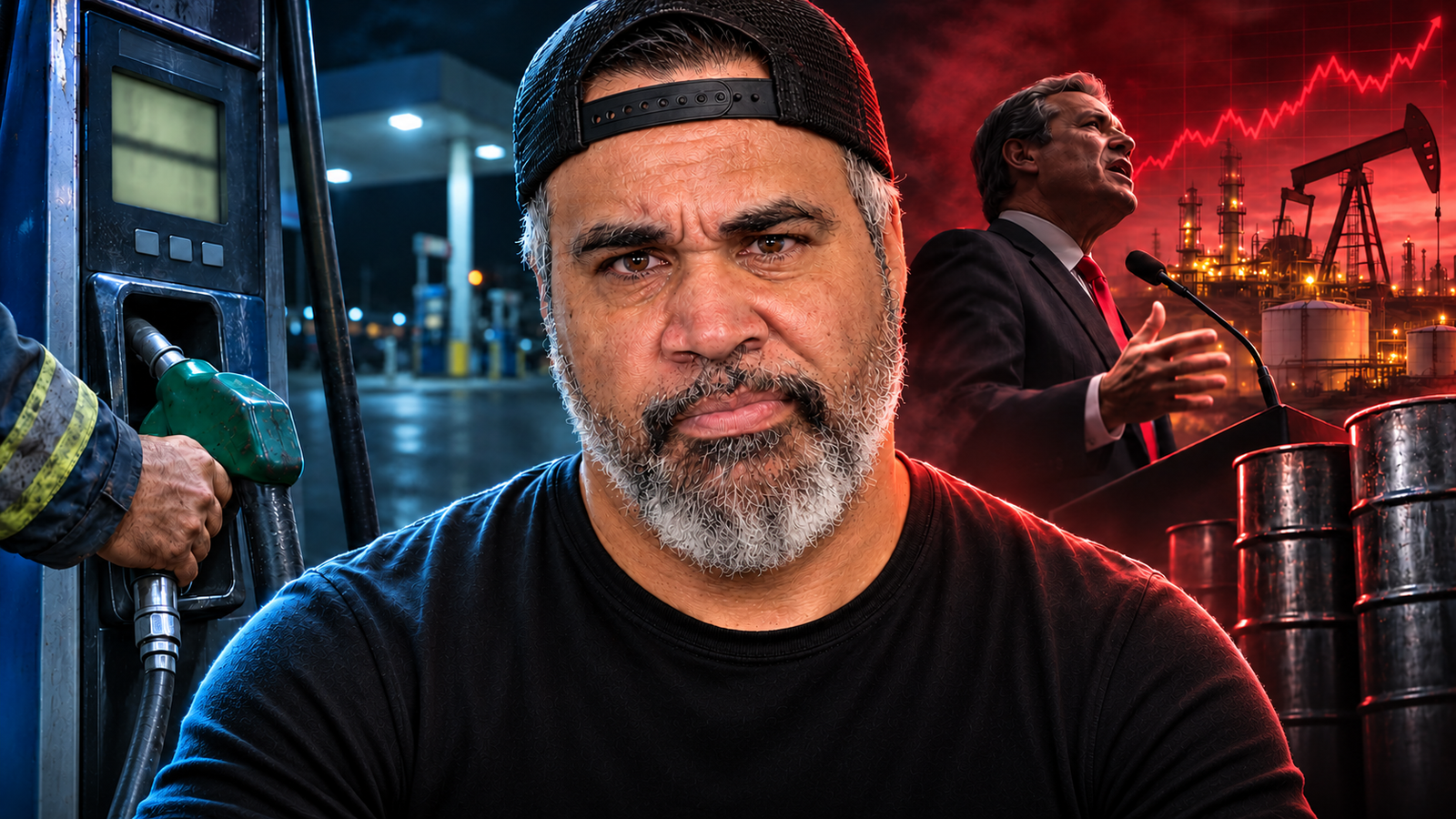

“If the people struggling at the gas pumps are the ones making a fortune, then who exactly is Trump talking about?”
That question is at the center of a recent rally clip. President Donald Trump says the U.S. oil and gas business is making hundreds of billions of dollars while gas prices are temporarily high. He links that claimed windfall to the Iran conflict and the movement of oil through the Strait of Hormuz.
But there’s a difference between the oil industry making money and American families benefiting from it. When fuel prices rise, drivers feel it immediately. Any gains flow to particular companies, their investors and other parts of the energy sector—not automatically to everyone paying at the pump.
Trump’s disclosed oil and gas stocks
Trump’s public financial disclosures list stocks in oil and gas companies, including Exxon Mobil, Chevron, Occidental Petroleum, Kinder Morgan and ConocoPhillips.
A report from the Democratic minority of the Senate Joint Economic Committee estimated that Trump’s oil and gas holdings were worth between $22.5 million and $81.6 million as of October 19, 2026. That estimate uses disclosed transaction ranges and changes in stock prices; it is not an exact account balance. The committee also noted that some later transactions may not yet have appeared in public filings.
That distinction matters. An increase in the estimated value of stock holdings can mean a larger paper gain. It does not necessarily mean the owner sold the shares or received that amount in cash.
How conflict can affect oil stocks
War and shipping disruptions can push oil prices higher, which may benefit some producers. Disruptions can also tighten supplies of gasoline and diesel and increase refining margins. Reuters reported that Exxon and Chevron beat third-quarter profit forecasts as conflict-related supply disruptions lifted refining margins.
The effect isn’t the same for every company, and rising oil prices don’t guarantee that every energy stock will rise. Earlier in the conflict, oil prices surged while major oil-company shares posted more modest gains, with investors weighing whether the disruption would last. If supply routes reopen and prices ease, some of those gains could reverse.
Conflict can create opportunities for some companies and investors. That establishes a possible financial benefit—not proof that any official acted to create one.
What the White House says
The White House has said Trump’s investment accounts are managed by outside financial institutions through discretionary accounts, and that Trump and his family cannot direct or influence the trades. That response is an important part of the story and should be considered alongside the public filings.
The public can still ask whether policies that affect energy markets create a conflict-of-interest concern when the president has reported holdings in that sector. Asking the question is not the same as proving wrongdoing.
Is this illegal market manipulation?
The disclosures and stock-price changes alone do not prove that Trump committed illegal market manipulation or that the war was undertaken to enrich him. The SEC describes market manipulation as manipulative or deceptive conduct intended to mislead investors or artificially affect market activity. A government decision that moves markets, by itself, does not establish those elements.
In my opinion, the combination of presidential power, reported financial holdings in affected companies and public comments about the industry’s gains raises serious questions about transparency and conflicts of interest. Those questions deserve scrutiny. Any claim of illegal conduct, though, requires evidence that meets the legal standard—not just suspicion or a rise in stock prices.
Who is “we” when the oil industry profits?
When Trump says the country is making a fortune, it’s fair to ask who specifically he means. Higher energy prices may benefit some companies and shareholders, while families and businesses face higher fuel costs. Those realities can exist at the same time.
The public deserves clear disclosures, independent oversight and straight answers about who benefits when government decisions reshape markets. That’s not a claim of guilt. It’s a demand for accountability.
What do you think? When leaders say the country is making money, whose money are they talking about—and who is paying the bill?
